AAV is one of the most widely used delivery platforms in gene therapy, supporting approved treatments for inherited retinal diseases, spinal muscular atrophy, hemophilia, and a growing number of clinical-stage programs.
AAV Delivery
Artis supports AAV development and GMP manufacturing through POSTmark, a platform that aligns development and cGMP manufacturing through standardized workflows to support scalable, reproducible production across clinical stages. AAV expertise is further supported through co-development of a NIIMBL-funded manufacturing platform leveraging next-generation purification technologies.
Capabilities
End-to-End AAV Manufacturing
Integrated support from process development through GMP production (50 L and 200 L), with in-house analytical development, QC, and fill/finish
Proven GMP Expertise
Artis team has 40+ cumulative years of viral vector manufacturing experience
Serotype and Platform Experience
Experience across multiple AAV serotypes, including AAV2 and AAV9
Process and Analytical Development
Expertise in upstream production, downstream purification, and analytical characterization
Accelerated Timelines
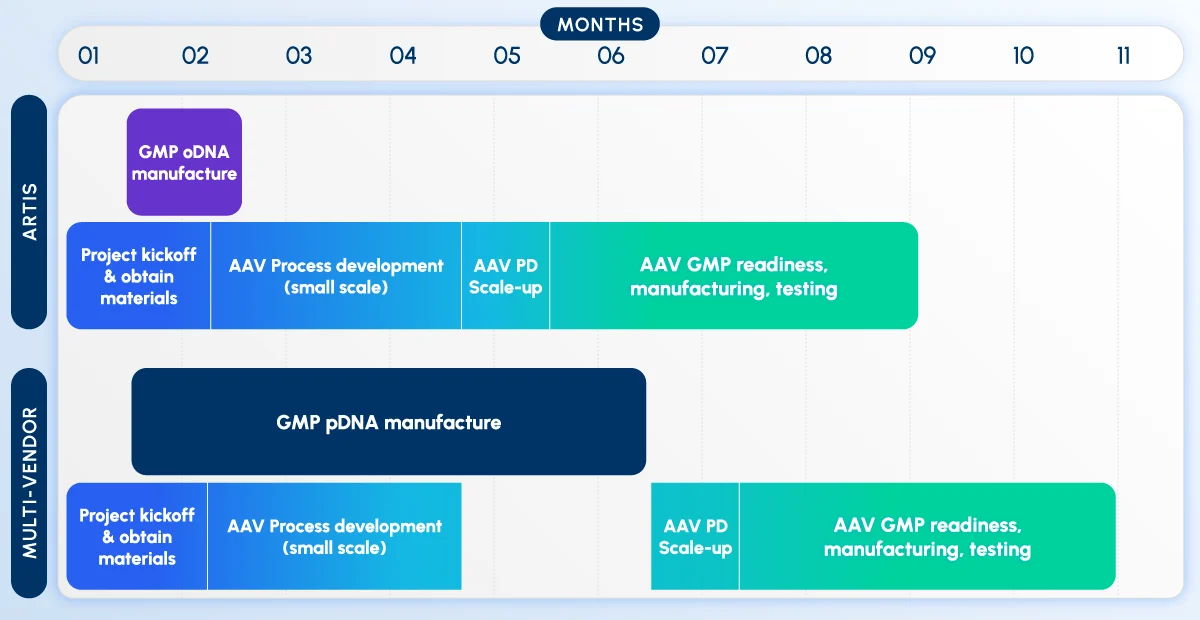
R&D supply in 4–8 weeks and GMP AAV in 6–9 months
Integrated QC and Fill/Finish
Full in-house quality control, release testing, and GMP fill/finish capabilities
Synthetic DNA Options
GMP-ready synthetic DNA as a plasmid alternative, available in as little as 2 weeks
NIIMBL AAV Platform Innovation
NIIMBL-funded AAV platform leveraging next-gen purification technologies to improve scalability, efficiency, and COGs
AAV Workflow: From First Run to GMP
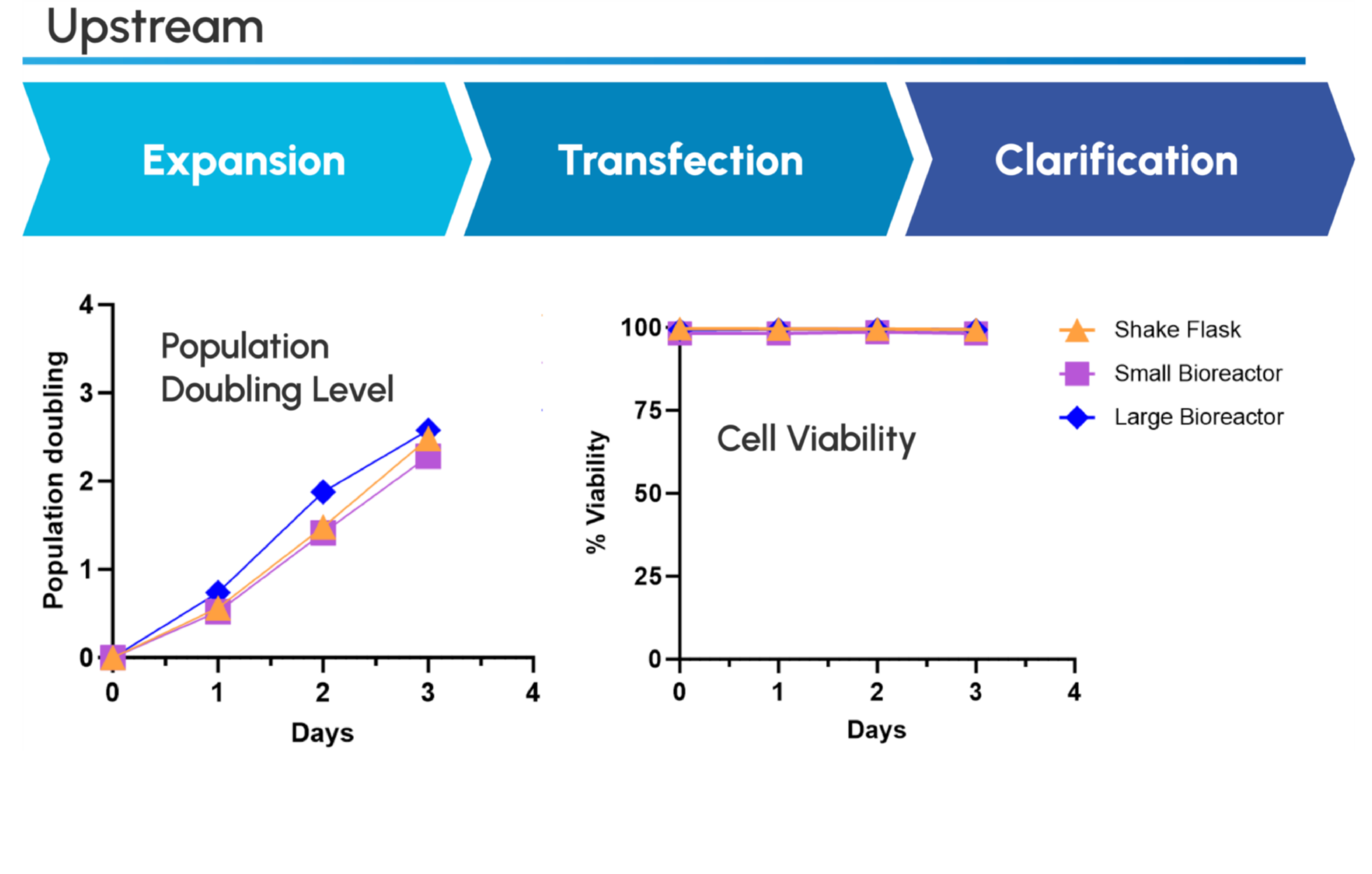
- HEK293 suspension cultures scaled from IDL to 200L
- Triple-transfection AAV systems
- Clarification via depth filtration
- Bioreactors designed for reproducibility & scalability

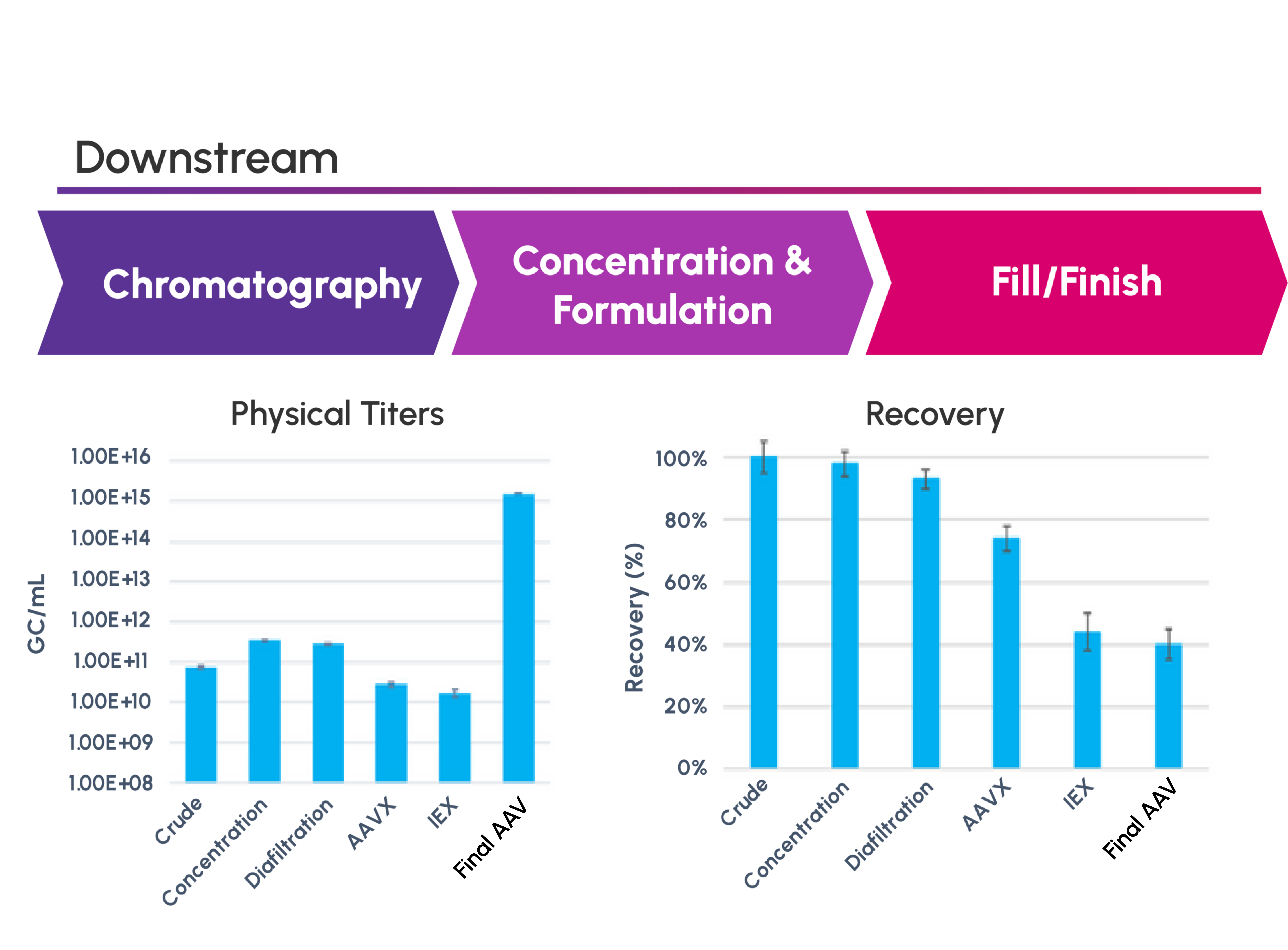
- Capture & polishing chromatography
- Concentration & formulation using tangential flow filtration
- Recovery rates matching or exceeding literature
- Sterile filtration & fully integrated fill/finish

AAV Analytics
Genomic titer
Capsid titer
Infectious titer / potency
q/ddPCR
ELISA
Flow cytometry
Copies/mL
Viral Particles/mL
Transducing units/mL
Transduction efficiency %
Size, aggregation
Host cell protein
AAV proteins
Host cell DNA
Plasmid
Nuclease
Capsid content
MALDS
ELISA
Western blotting
PicoGreen
qPCR
ELISA
Mass photometry
Size (nm), particles/mL
µg/mL
Semi-quantitative results
(VP1:VP2:VP3)
ng/mL
Copies/mL
pg/mL
% full capsid
Capsid
Viral genome
ELISA
Sequencing (outsourced)
Viral particles confirmed
Sequence alignment (%)
Appearance
pH
Osmolarity
Sterility
Endotoxin
Bioburden
Mycoplasma
Visual
Probe
Osmometer
Bact/Alert
Endosafe MCS reader
Microbial enumeration
ddPCR
Color / clarity
pH
mOsm/mL
Growth / no growth
IU/mL
TAMC / TYMC
Negative / positive
Process and Analytical Development
Within the POSTmark framework, development and GMP manufacturing are aligned through standardized workflows, supporting efficient technology transfer and scalable production.
- Plasmid and transfection optimization
- HEK293 suspension-based upstream workflows
- Downstream purification strategies to improve purity & recovery
- Concentration & formulation approaches supporting stability & product quality
- Processes aligned with GMP manufacturing & technology transfer
- Vector genome (vg) titer & infectious titer methods
- Full/empty capsid ratio & capsid characterization
- Potency & functional assays
- Identity, purity, & residual impurity testing
- Methods developed & qualified to support GMP release
Quality and Compliance
cGMP facilities and operations are designed to meet applicable US FDA regulations (including 21 CFR Parts 11, 210, 211, 610, and 1271) and relevant ICH quality guidelines.