 Stem Cells
  CAR-T
CAR-T  AAV Delivery
  LVV Delivery
  Other Viral Vectors
  Extracellular Vesicles
  Nanoparticles
 Quality and Compliance
cGMP facilities and operations are designed to meet applicable US FDA regulations (including 21 CFR Parts 11, 210, 211, 610, and 1271) and relevant ICH quality guidelines.
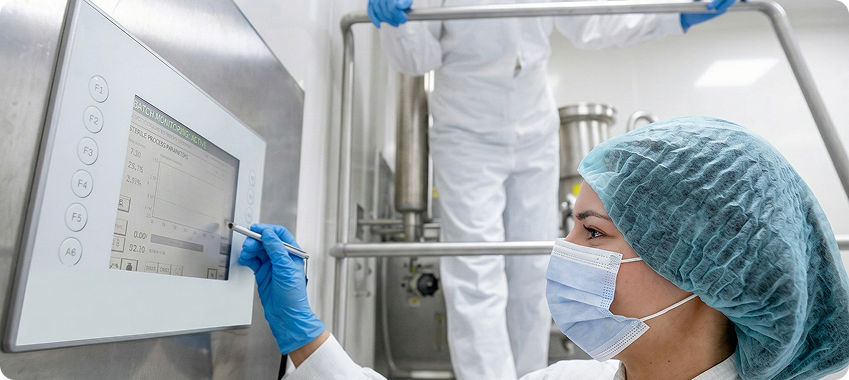



EV manufacturing presents unique challenges in product characterization, process consistency, and scalability. By combining stem cell biology, process development, analytics, and GMP manufacturing, Artis supports EV programs from research through clinical manufacturing.


Integrated production and analytical capabilities supporting development, characterization, and GMP manufacturing

Experience across primary cells, iPSC-derived cells, and differentiated cell types

Expertise across adherent and suspension systems, including process translation

Scale-up experience from shake flasks to bioreactor platforms

Integrated development of production, harvest, purification, and recovery

Chromatographic and membrane-based approaches supporting EV recovery and purity

Flow-based and orthogonal analytical methods supporting EV characterization, comparability, and product quality


Integrated process and analytical development support scalable EV manufacturing and consistent product characterization.


Concentration
Size
Target protein
DSL, NTA
DSL, NTA
Quantitative Western blotting
Particles/mL
nm
Concentration
Biological function
Cell-based assay
Activity / Endpoint
EV markers (CD9, CD61)
Flow cytometry, microscopy, Western blot, ELISA
% Positive / presence
Residual host cell protein
Residual host cell DNA
Size, aggregation, stability
ELISA
NGS, PicoGreen
HPLC (SEC), DLS/NTA
µg/mL
Copies/mL, ng/mL
Size / profile
Appearance
pH
Osmolarity
Visual inspection
pH probe
Osmometer
Color / clarity
pH
mOsm/kg
Sterility
Mycoplasma
Bioburden
Endotoxin
BACT/Alert
ddPCR
Microbial enumeration
Spectrophotometry
Pass / fail
Copies/mL
CFU/mL
EU/mL
cGMP facilities and operations are designed to meet applicable US FDA regulations (including 21 CFR Parts 11, 210, 211, 610, and 1271) and relevant ICH quality guidelines.
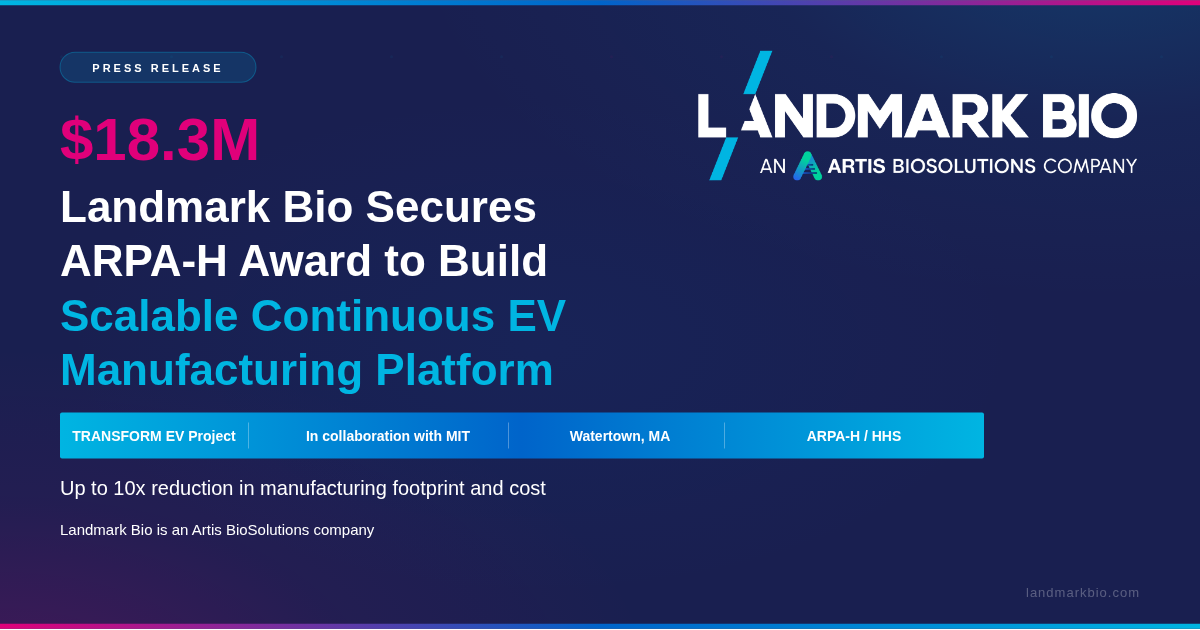
Landmark Bio, an Artis BioSolutions company dedicated to accelerating the translation of next-generation advanced therapies from discovery to clinical and commercial production, today announced that it has secured an Advanced Research Projects Agency for Health (ARPA-H) award totaling up to $18.3 million to build an efficient, robust, and scalable continuous manufacturing platform for extracellular vesicles (EVs).